
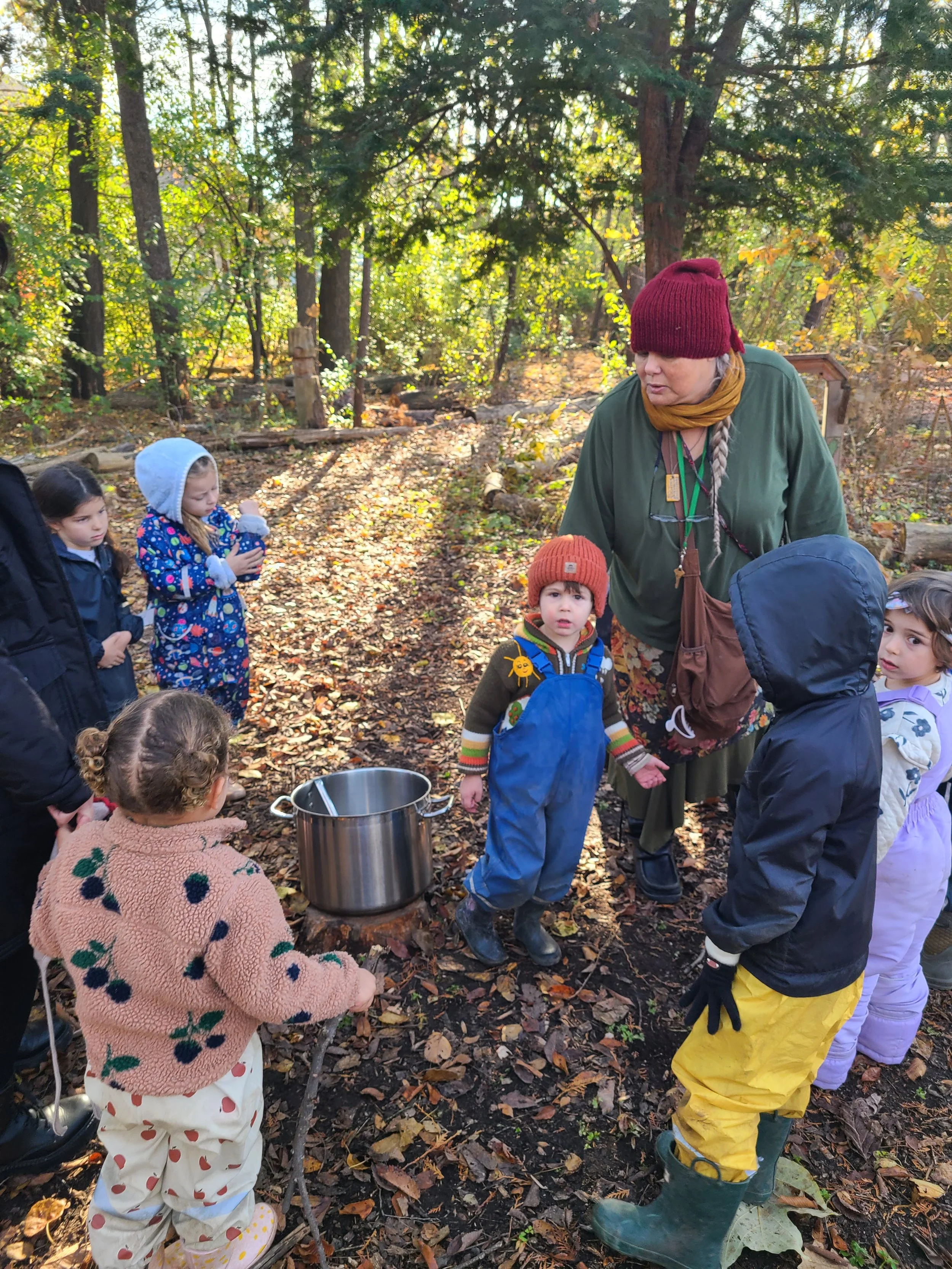
This week, our Early Childhood classroom made Stone Soup. The forest filled with the smell of onions and simmering broth, small hands stirred the pot, and children carried their gifts with great care. If you read our earlier post, you know why this lesson matters for the groundwork it lays: math sense, language, focus, and fine motor skill. Today we want to talk about something harder to measure, and just as important.
The soup is a story about giving
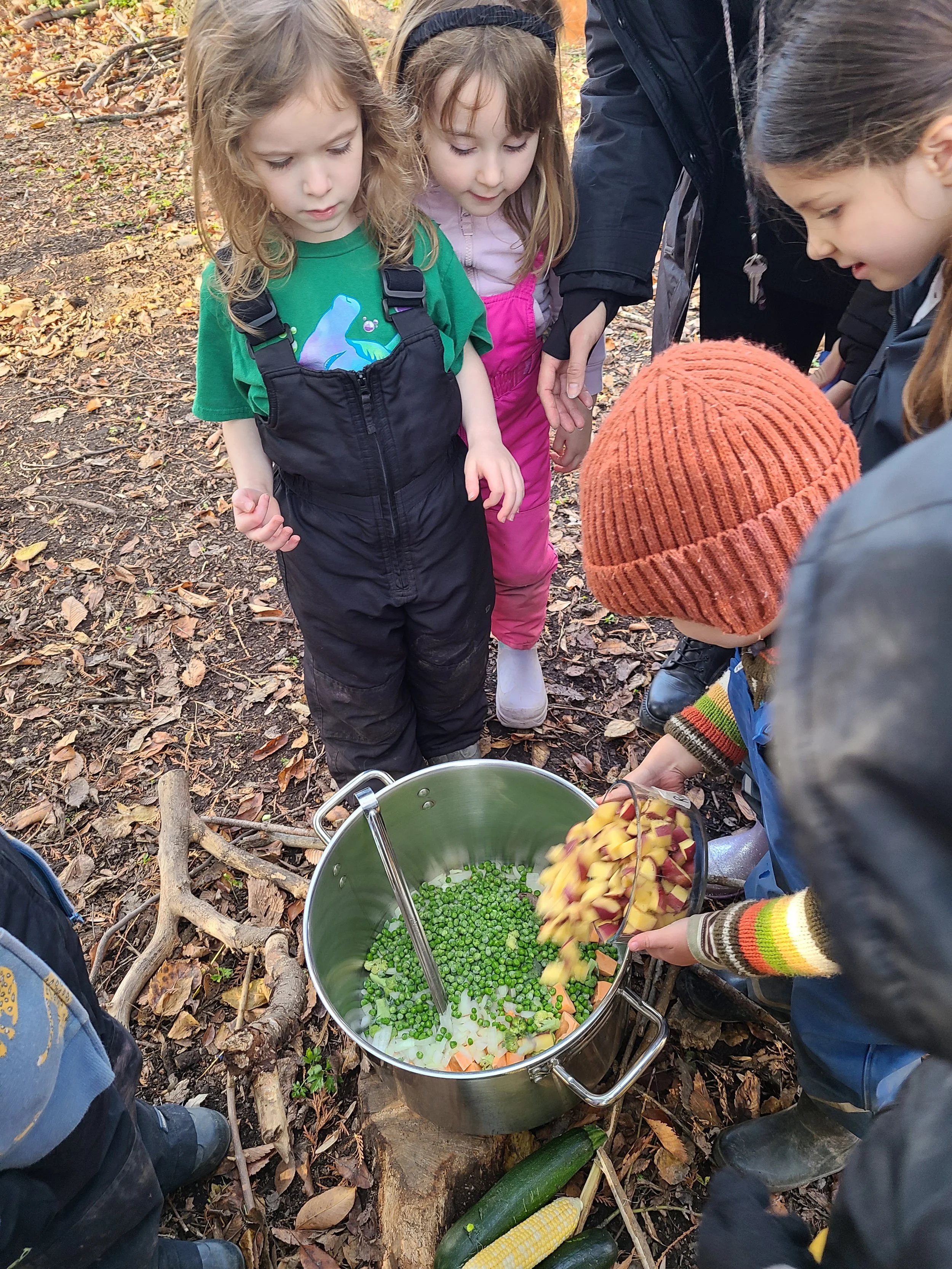
In the old tale, a traveler arrives with only a stone and a pot of water. One villager brings a carrot, another an onion, another a few potatoes. No single offering is impressive on its own. Together, they become a meal that feeds everyone. That is what we watched in our classroom. Every child brought something, whether it was a vegetable, a steady stir, a careful pour, or simply a happy presence at the table. The soup was richer because each contribution was different.
Gratitude for our community
Our classroom works the same way. A school is a pot that many people fill: the families who send in an extra vegetable or an encouraging word, the teachers who give each day their full attention, the volunteers, the neighbors, the friends who show up for festivals and work days. We are deeply grateful for every one of them. When children sit down to a meal they helped make, they begin to feel something we don't need to explain to them: this came from us, and from each other. That feeling is where gratitude begins.
There is also love in this lesson. Peeling a carrot beside a friend, being trusted with real work, and tasting the result of your own effort tell a young child that they are capable and that they belong. Our teachers prepare the lesson with care because they love these children, and children feel that love in the rhythm of the morning, the warmth of the room, and the dignity of meaningful work.
Living generously sparks synergy
We often think of generosity as giving things. In a community, generosity takes many forms: time, attention, patience, skill, encouragement, a willingness to wait for someone who is learning. Each kind adds something the others cannot and something wonderful happens when we give this way. The whole becomes more than the sum of its parts. One carrot is a snack. A pot full of everyone's carrots, onions, and potatoes is a feast. A classroom full of children who feel valued and who value each other becomes a place where learning flourishes. That is synergy, and young children can feel it long before they have a word for it.
Waldorf education aims to educate the whole child: head, heart, and hands. Stone Soup touches all three at once. The hands wash, peel, and stir. The head follows a story and a sequence of steps. The heart learns what it feels like to give and to receive.
In early childhood, learning happens through experience, imitation, and relationship, not through explanation. Children don't absorb generosity by being told to be generous. They absorb it by living inside a community where giving is joyful, where everyone's offering is welcomed, and where the reward is a warm bowl shared together. These early experiences become the root system for the kind of people children grow up to be: grateful, cooperative, and confident that they have something worth offering.
Bring it home
You can carry this into your own family. Invite your child to help with a meal and let them choose something to add. At the table, notice together who contributed what. Ask, "What did we each bring today?" Small rituals like this keep the lesson alive well beyond the classroom.
Thank you for being part of our soup. We are so glad you're here.
