
What it is, why children love it, and how Games class here compares to the PE you remember
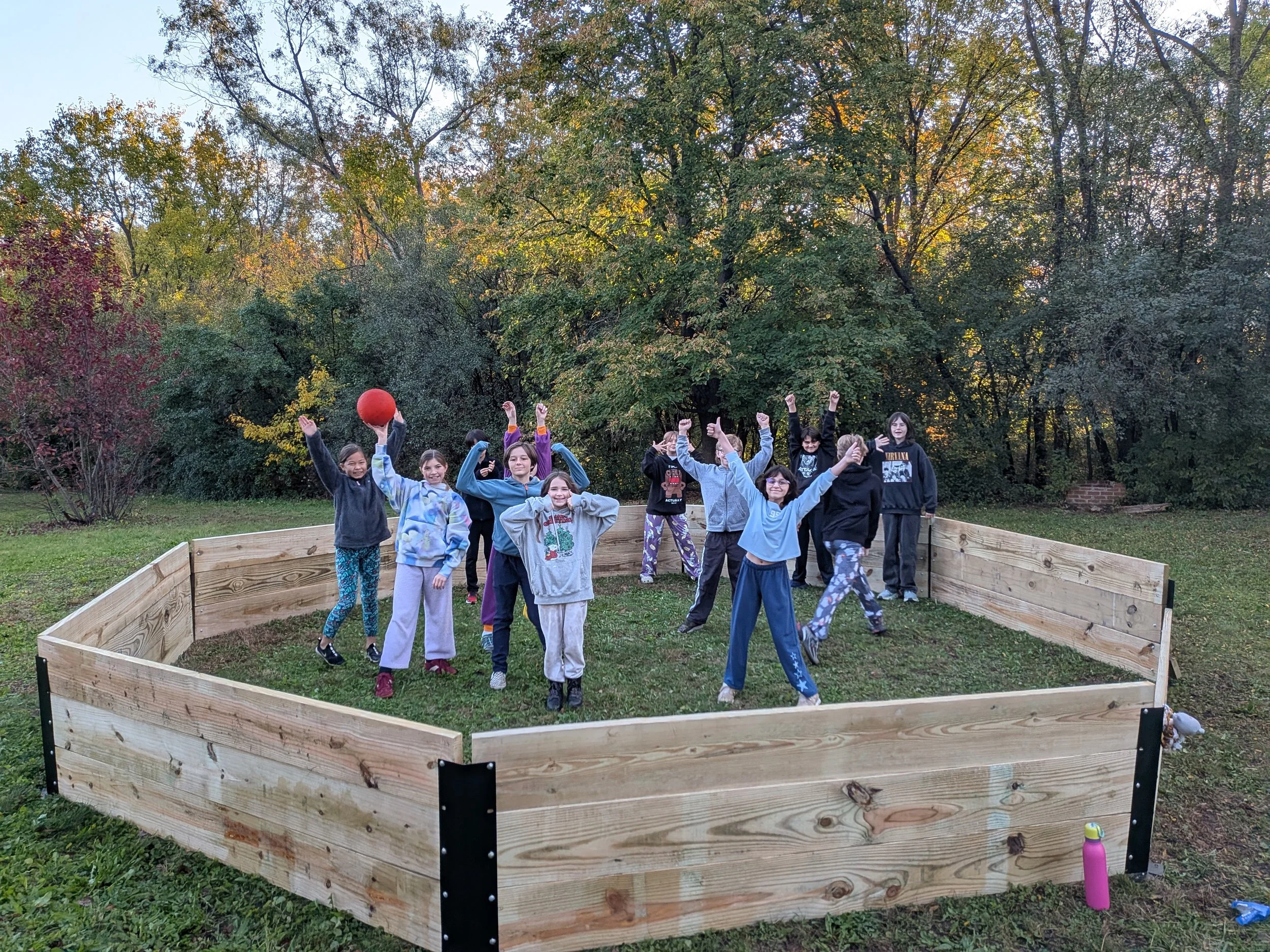
If you've walked past the playground lately, you may have noticed a new addition: an eight-sided wooden pit, and a lot of laughing children inside it. Welcome to our new Gaga ball pit. So, what is Gaga ball? Gaga ball is often described as a gentler cousin of dodgeball. It began in Israel, and the name is commonly said to come from the Hebrew word for "touch," echoed twice. It is played in a walled octagonal pit with a soft, lightly inflated ball.
The rules are simple enough to learn in a minute:
The ball is bounced into the pit, and play begins after the third bounce.
Players strike the ball with an open hand, trying to hit another player at or below the knees.
If you are hit, you are out. If you hit the ball out of the pit, you are out too.
No holding or carrying the ball, and no hitting it twice in a row yourself.
The last player standing wins, and a new round starts right away.
Because the ball is soft and the pit keeps it close, the game is fast, joyful, and forgiving. There is no waiting around for a turn, no throwing at someone's face, and no need to be the strongest or most skilled to have a great time. Children move constantly: dodging, jumping, tracking the ball, reading each other's movements, and making quick decisions.
How Games class differs from traditional PE
In many Waldorf schools, what other schools call physical education is called Games. The name is intentional. Movement is treated as part of the whole child's development, not only as fitness or sport.
Developmental timing. Games are chosen to meet children where they are. Younger students play singing and circle games, running and chasing games, and imaginative play. As they grow, the games gradually become more structured, with more strategy, rules, and teamwork. A game like Gaga ball is a good fit because it is quick to learn but rewards growing coordination and awareness.
Cooperation before competition. Competition has a place, but it is introduced thoughtfully. Children learn to play fairly, to lose gracefully, to cheer for others, and to see the game as something shared rather than a contest to be won at all costs.
Imagination and rhythm. Games class often has a story, a rhythm, or a playful theme. Movement is joyful and connected to the rest of the school day, not a separate subject.
Every child included. Rather than sorting students into the athletic and the not-so-athletic, Games aims for every child to take part, build confidence, and find a place in the group.
And how it's the same
Whatever the name, the goals will sound familiar:
Fitness and health. Running, jumping, balancing, and reacting build strength, stamina, and coordination.
Motor skills. Spatial awareness, agility, and hand-eye coordination all get a workout.
Teamwork and sportsmanship. Taking turns, following rules, and handling wins and losses are life skills.
Time to move. Children need to be active, and a good run around outdoors helps them focus and feel good in the classroom afterward.
Come see it in action
The Gaga ball pit is a wonderful example of what Games is all about: simple, social, active play that helps children grow in body and spirit. Ask your child to show you how it's played. Chances are they'll be happy to demonstrate, and to tell you exactly how they plan to be the last one standing.
