RIGOR BY DESIGN: How a Waldorf Education Builds Deep, Lasting Thinking — A Look Through Bloom's Taxonomy
While exploring Waldorf, you may find yourself asking a fair question: with so much emphasis on movement, art, storytelling, and handwork, where is the academic rigor? It's a question worth taking seriously and one best answered with a widely respected framework for describing the depth of student thinking: Bloom's Taxonomy.
Bloom's Taxonomy, developed by educational psychologist Benjamin Bloom and his colleagues in 1956 and later revised in 2001, describes six levels of cognitive engagement, arranged from foundational to most complex: Remember, Understand, Apply, Analyze, Evaluate, and Create. Schools and universities around the world use it to design curriculum and to check whether students are merely absorbing information or genuinely thinking with it.
What follows maps each level of Bloom's Taxonomy to specific, everyday practices in a Waldorf classroom. The claim we want to make is simple: Waldorf education does not skip the demanding upper levels of thinking in favor of play and art. Rather, it builds toward them deliberately, giving each level a firm foundation before asking children to reach for the next so that by the upper grades and high school, students are working consistently at the highest levels of critical and creative thought.
The Six Levels, in the Waldorf Classroom
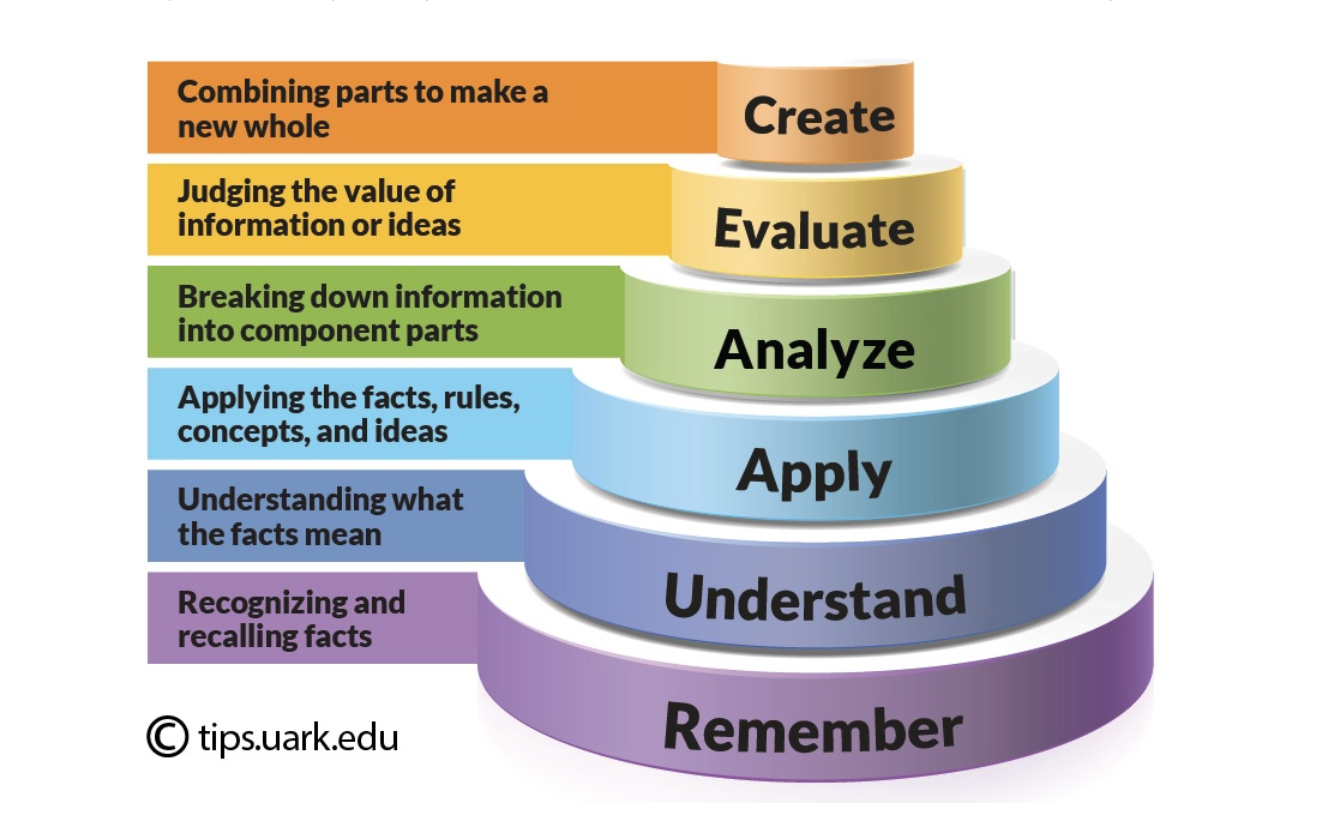
1 · REMEMBER — recall facts, terms, and basic concepts
The foundation of all thinking is a store of real knowledge, held not as scattered facts but as something the child has truly taken in.
In the Waldorf classroom: rhythm and repetition are used purposefully as a way of letting knowledge settle into the body and memory.
Morning verses, times-table chants, and grammar jingles anchor content through movement and sound.
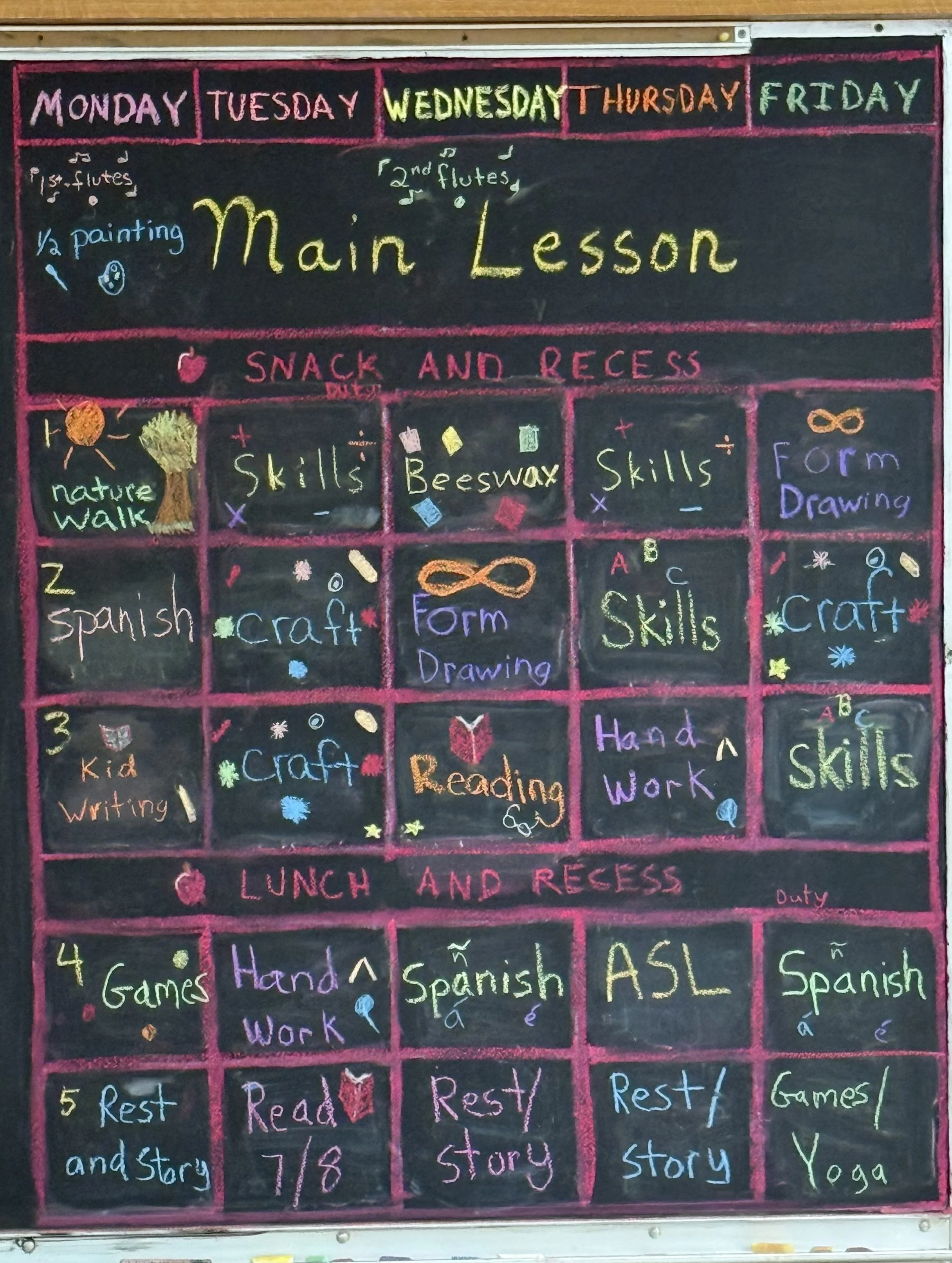
Each main lesson day opens with children recalling and narrating the previous day's material aloud, before it is ever written down.
Recitation and memorized poetry build the discipline of holding material in mind.
2 · UNDERSTAND — explain ideas, summarize, and interpret meaning
Facts mean little until a child can restate them in his or her own words and picture what they signify.
In the Waldorf classroom: abstract concepts are first delivered as living pictures: story, image, and narrative so comprehension is genuine rather than borrowed.
Fairy tales, fables, myths, and biography carry moral and historical content that younger children can actually grasp, long before they could understand it as abstract argument.
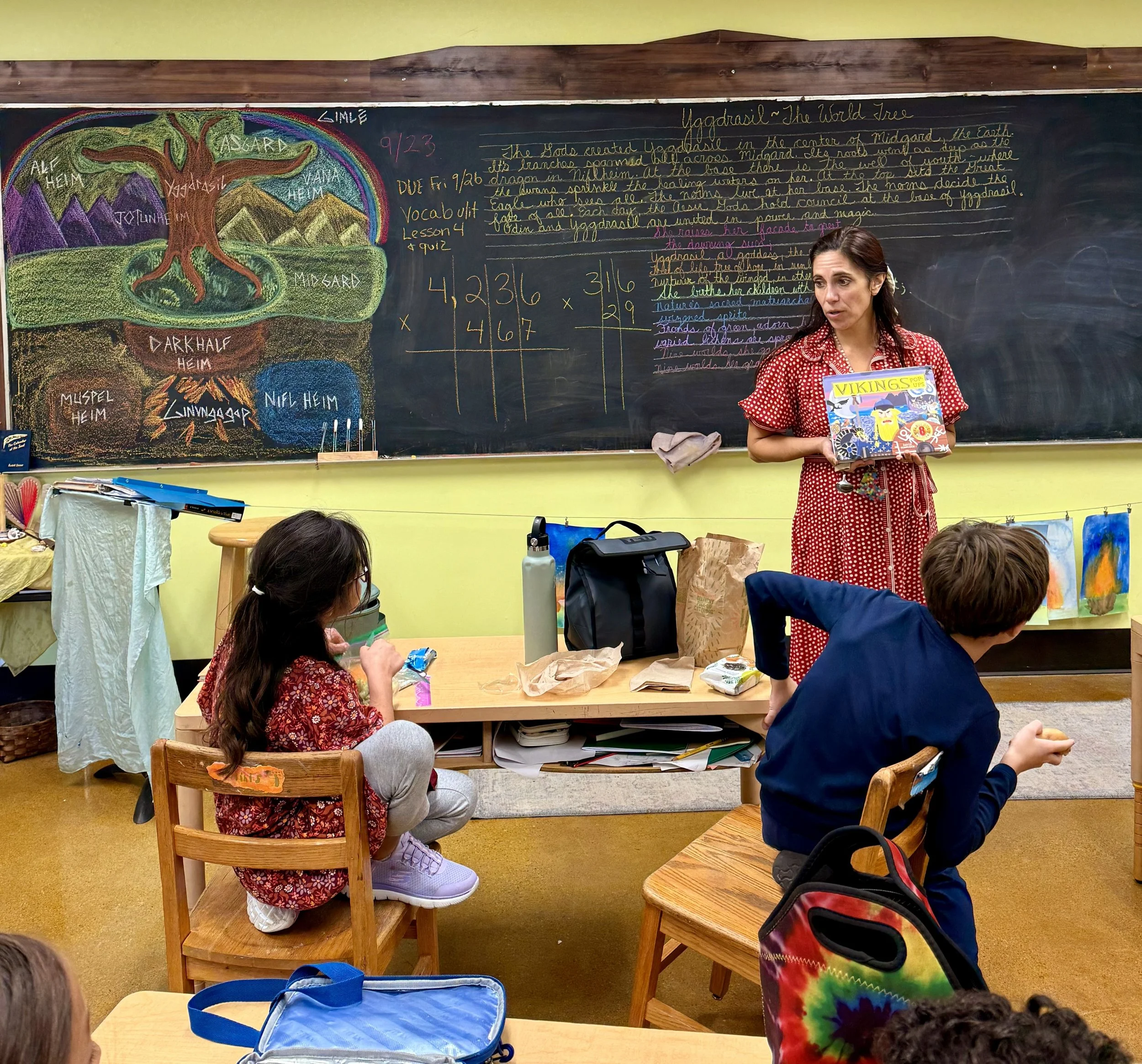
Students narrate lessons back in their own words and illustrate them in hand-made main lesson books, an ongoing check for real understanding.
Science phenomena are observed and described before they are explained, so the concept is understood, not just memorized.
3 · APPLY — use knowledge and skills in a new, concrete situation
Knowledge that cannot be used is inert. Waldorf education insists that children do something with what they learn.
In the Waldorf classroom: the hands are treated as an organ of understanding. Children continually put ideas into practice.
Form drawing and geometry are applied by hand well before they are proven on paper.
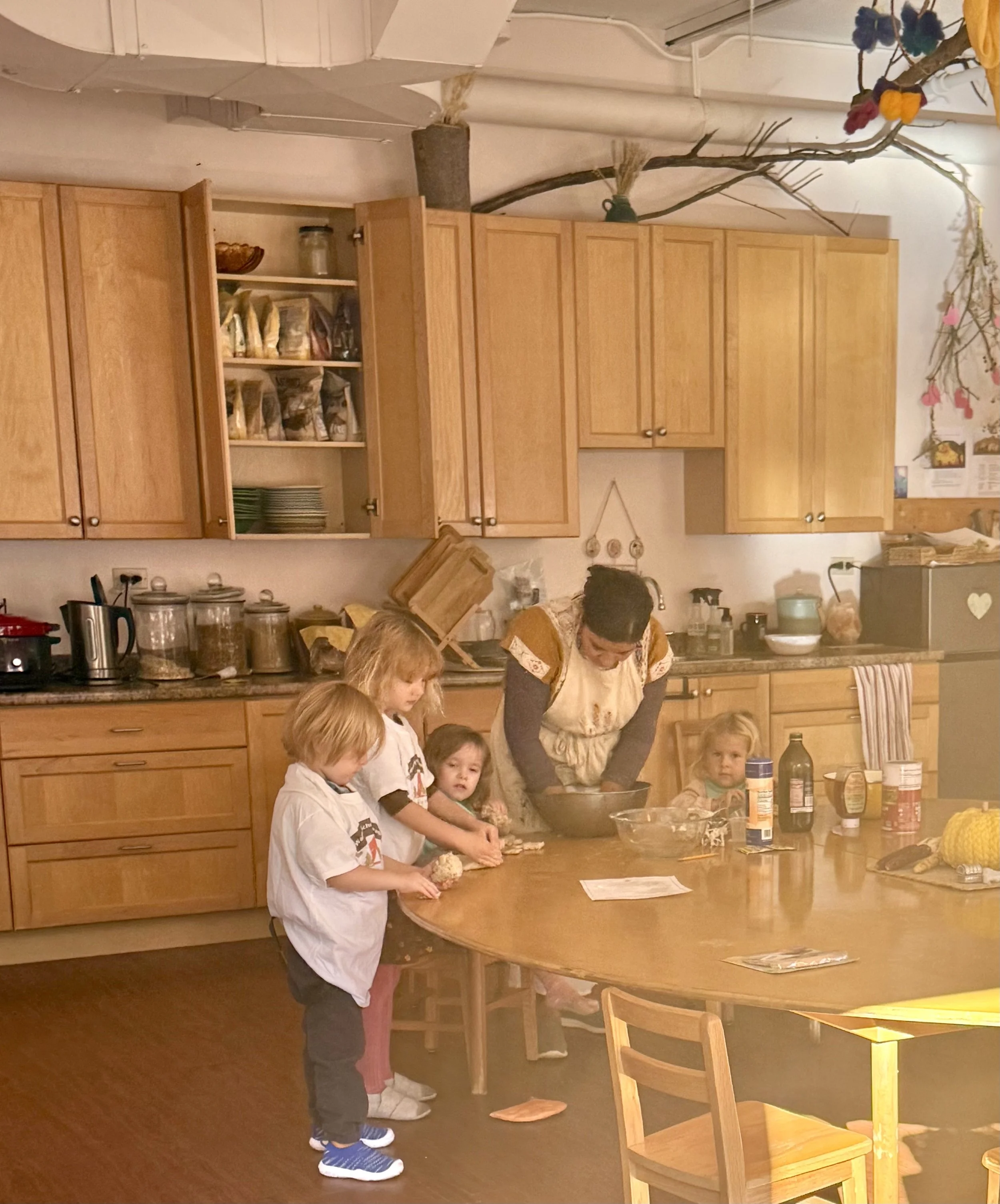
Handwork, woodworking, and gardening require planning, measuring, and adjusting; applied math and applied physics in daily life.
Science demonstrations are followed by students replicating and extending the experiment themselves.
4 · ANALYZE — break ideas into parts and examine relationships
By the middle grades, children are ready to take ideas apart: to compare, classify, and ask why something is true.
In the Waldorf classroom: the middle-school curriculum is built around comparison and structure.
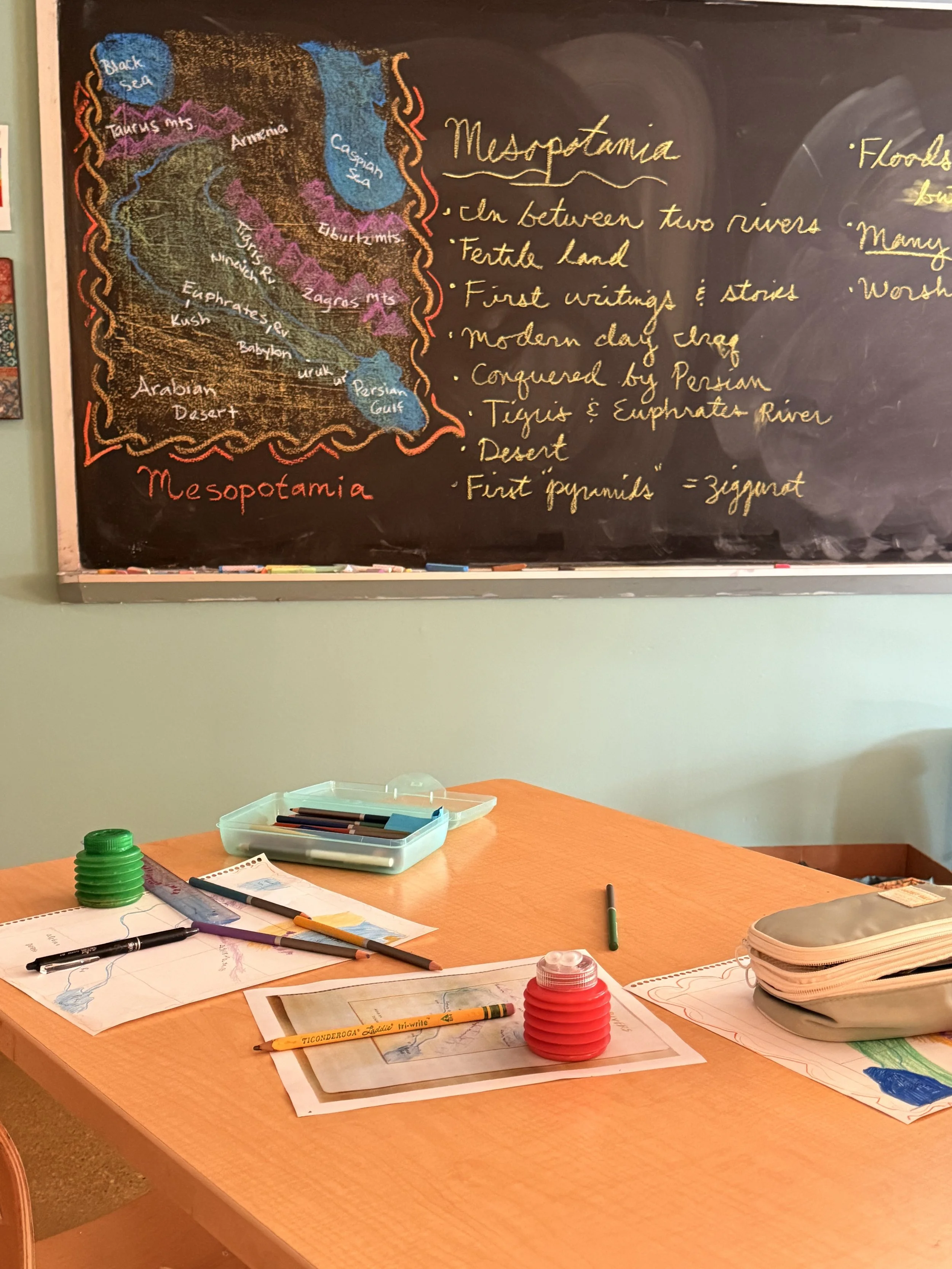
Comparative studies of civilizations, biomes, or historical periods ask students to identify patterns and causes, not just events.
Geometric and algebraic proofs require students to justify each step logically.
Preparing a class play means analyzing character motivation, dramatic structure, and language.
5 · EVALUATE — judge, critique, and defend a position with reasoning
Mature thinking requires weighing evidence and forming a defensible judgment rather than simply reciting a conclusion.
In the Waldorf classroom: the upper grades and high school make judgment and critique a regular discipline.
Socratic discussion and formal debate ask students to take, defend, and revise a position in real time.
Students critique their own artistic and written work in guided review, developing an internal standard rather than relying only on a grade.
Research essays require a thesis, evidence, and a defended conclusion rather than a simple summation of content from cited sources.
6 · CREATE — generate original work, arguments, or solutions
The summit of Bloom's Taxonomy is original production and it is the hallmark of a Waldorf education.
In the Waldorf classroom: students are continually asked to produce something new, not just reproduce what they were given.
The eighth-grade individual project (an independent, self-chosen research topic presented publicly) asks students to originate and defend real work.
Every main lesson book 1st - 8th grade is an original synthesis: each student's own written, illustrated record of the material, not a copied worksheet.
Waldorf high school students design original experiments, compose music, and produce independent artistic and written capstone work.
Why This Matters for Rigor
A curriculum can look rigorous on the surface with thick textbooks, early testing, accelerated content and still ask students to do little more than remember and repeat. Bloom's Taxonomy reminds us that real rigor is measured by the level of thinking a student is asked to do, not the volume of information passing through the classroom.
The Waldorf approach is built on the understanding that each level of thinking needs its proper foundation at the proper developmental moment. Young children build memory and understanding through story, rhythm, and image; the hands and the will are engaged before the analytical intellect is asked to carry the full weight of abstraction; and by the upper grades, students are regularly working at the levels of analysis, evaluation, and original creation that Bloom's framework identifies as the most demanding of all.
That is the case we would make to any parent weighing this education for a child: not that it is easier than a conventional path, but that it is sequenced with unusual care toward the same destination every serious education aims for: a mind capable of genuine, independent, creative thought.
Questions about how this looks in a particular grade? We welcome you to visit a classroom, sit in on a main lesson, or talk with one of our class teachers.