



Every now and then, a study comes along that doesn’t shock parents so much as it quietly validates what their instincts have been whispering all along. The recent research published by the American Academy of Pediatrics showing that early smartphone ownership is associated with higher rates of depression, obesity, and sleep disruptions—felt like one of those moments. Not a revelation, but a gentle confirmation: waiting makes sense.
In a Waldorf school community, the pressure around smartphones looks different, but it doesn’t disappear. Your child may not see phones at recess or tucked into backpacks, but they certainly encounter them elsewhere. Their cousins have one. The neighbor uses one to play music. A family friend is allowed on social media. The awareness builds slowly, then becomes more pointed: “When do I get one?”
Curiosity usually begins in the later elementary years. Fifth and sixth graders notice that older kids use smartphones to text, take photos, or watch videos. By seventh and eighth grade, even if most of their immediate classmates remain phone-free, they start to compare themselves to peers outside school. And by ninth or tenth grade, as their social world expands beyond the classroom, a phone may feel like a symbol of independence more than a piece of technology.
Even in a community committed to limited screens and delayed technology, the emotional weight of the smartphone question lands squarely with parents. You want to honor your values, and you also want your child to feel connected socially and culturally. That inner pull, “I think they’re still too young for this”, often speaks just as loudly as any external guideline.
The research supports that instinct. Early adolescence is a uniquely sensitive developmental stage. It’s a time when friendships deepen, identity solidifies, impulse control develops, and emotions run high. Introducing a device engineered to fragment attention, disrupt sleep rhythms, amplify comparison, and transport kids into adult social spaces too soon can overwhelm the very skills they’re still learning to build.
In this context, saying “not yet” isn’t about resisting technology; it’s about respecting development. It’s a decision rooted in care, confidence, and pacing. It reflects an understanding that what’s developmentally appropriate doesn’t always align with what’s culturally rushed.
Of course, because the world outside your school is not screen-free, your child will encounter others who use smartphones to coordinate rides, listen to music, or stay connected. They may wish for the same convenience or sense of belonging. This is where your language becomes powerful. A thoughtful “not yet” is one of the most grounding things you can offer: steady, loving, and honest. It reframes waiting not as a punishment, but as preparation, and recognizes that readiness looks different at each age and in each child. We’ve crafted some sample letters using developmentally appropriate language you can use or draw inspiration from as you frame the conversation.
While you wait, your child still deserves connection. Fortunately, connection does not require a smartphone. Many families find that a home landline offers a grounding, low-stress way for kids to talk with friends. Some parents offer gradual access: borrowing a parent’s phone for logistics, using a shared tablet for supervised tasks, or introducing specific features slowly and intentionally starting in 7th grade.
These choices aren’t about withholding modern life. They’re about giving your child time. Time to sleep deeply. Time to build real-world friendships. Time to be bored, to explore, to stretch into their interests. Time to develop the self-knowledge and resilience that make thoughtful, balanced technology use possible later on.
One of the most beautiful parts of a screen-free school is that your child gets to experience that time alongside peers who are on a similar path. They’re not navigating the world alone; neither are you. Even if cousins or family friends have smartphones, your child spends their days in an environment that values slow growth, presence, imagination, and human connection. That is a rare and meaningful gift.
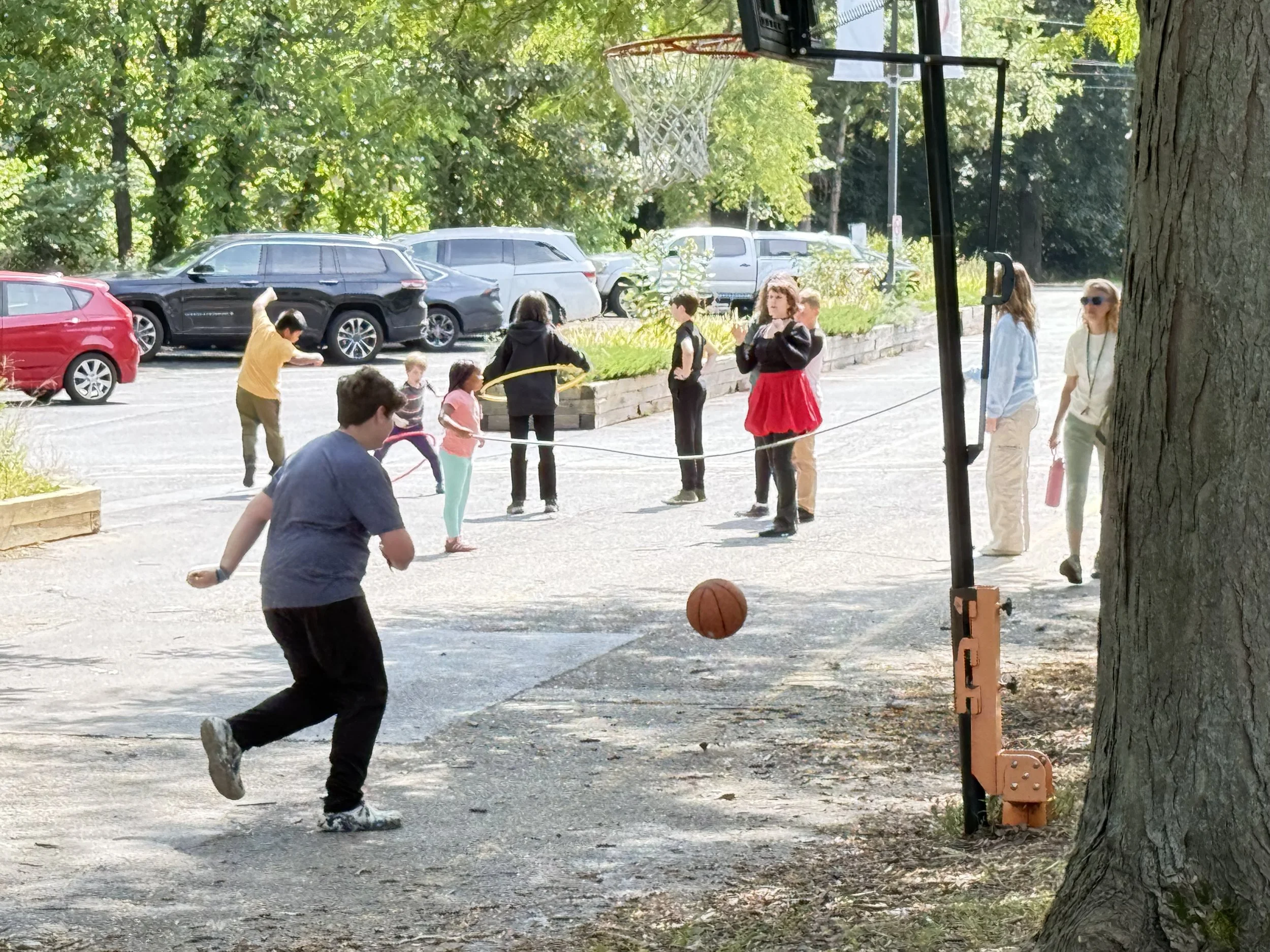
Delaying a smartphone does not hold children back; it allows them to move forward with steadiness. It preserves the essential elements of childhood—the face-to-face conversations, the playground creativity, the shared jokes, the long stretches of unstructured time that build confidence and identity. Those experiences form the foundation they’ll need when they eventually step into the digital world more readily and independently.
And when your child is ready, you won’t be handing over a device because culture demands it. You’ll be doing so because they’ve grown into it emotionally, socially, and developmentally. They’ll meet technology with balance, humility, and awareness, rather than overwhelm.
Choosing what is developmentally right over what is culturally rushed is one of the most meaningful gifts you can give your child.
