
Understanding “The Big 3” Early Childhood Philosophies: Waldorf, Montessori, and Reggio Emilia
Choosing an early childhood program can feel overwhelming. Parents often hear about Waldorf, Montessori, and Reggio Emilia schools but may not fully understand what makes them different or what they share in common. While each approach has a unique philosophy and classroom experience, all three were developed from a deep respect for children and a belief that learning should be meaningful, engaging, and developmentally appropriate. Rather than asking which approach is “best,” it can be more helpful to ask: Which approach best aligns with my child’s personality, learning style, and my family’s values?This guide explores the similarities, differences, and strengths of the three most influential educational philosophies in early childhood education.
What Do Waldorf, Montessori, and Reggio Emilia Have in Common?
Despite their differences, these approaches share several core beliefs: They View Children as Capable Learners. All three philosophies reject the idea that children simply absorb information from adults. Instead, they see children as active participants in their own learning. They Emphasize Hands-On Experiences. Children learn by doing. Whether working with Montessori materials, engaging in imaginative play in a Waldorf classroom, or collaborating on a Reggio project, children are encouraged to explore concepts through direct experience. They Focus on the Whole Child. Academic skills matter, but social-emotional development, creativity, independence, communication, and problem-solving are equally important. They Value Respectful Relationships. Teachers in all three approaches seek to build strong relationships with children and families, creating environments where children feel safe, respected, and understood. They Prioritize Development Over Standardization. Rather than pushing children through rigid academic benchmarks, these philosophies aim to support learning that aligns with children's developmental readiness.
Montessori: Independence Through Purposeful Learning
Developed by physician and educator Maria Montessori in the early 1900s, Montessori education is built around the belief that children naturally want to learn and can achieve remarkable independence when given the right environment.
What a Montessori Classroom Looks Like
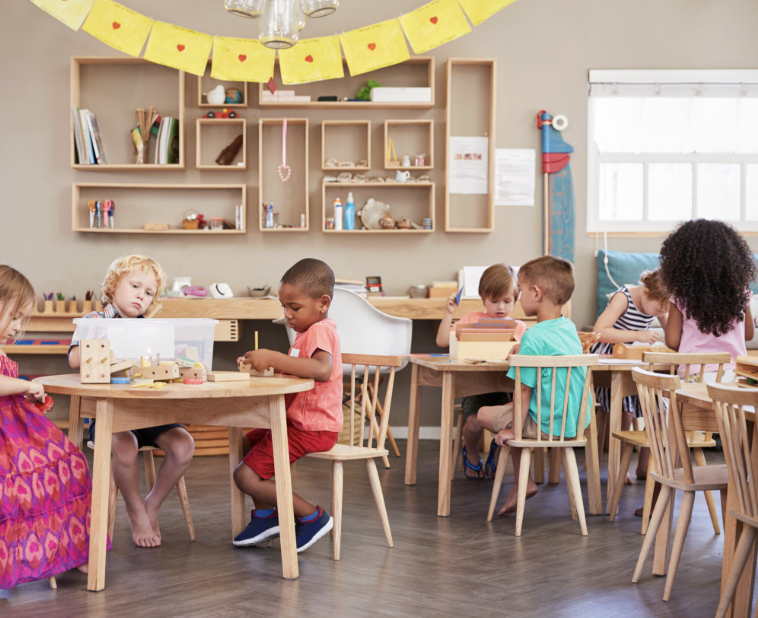
Montessori classrooms are carefully prepared with specialized materials organized on accessible shelves. Children choose activities independently and work at their own pace. Teachers serve as guides rather than traditional instructors, observing children and introducing lessons when appropriate. Multi-age classrooms are common, allowing younger children to learn from older peers and older children to develop leadership skills. Key characteristics include:
Child-directed learning
Structured environment
Mixed-age groupings
Strong development of independence
Benefits for Children
Montessori programs often help children develop:
Self-confidence
Independence
Responsibility
Executive functioning skills
Concentration
Intrinsic motivation
Children learn to manage their work, make choices, and solve problems independently from an early age. Montessori may be particularly appealing for families who value:
Independence
Order and structure
Self-paced learning
Academic readiness through hands-on exploration
Waldorf: Nurturing Imagination and Whole-Child Development
Founded by philosopher and educator Rudolf Steiner in 1919, Waldorf education focuses on nurturing the intellectual, emotional, physical, and creative aspects of child development. The philosophy places particular emphasis on imagination, storytelling, artistic expression, and connection to nature.

What a Waldorf Classroom Looks Like
Waldorf classrooms often feel warm, home-like, and intentionally simple. Natural materials such as wood, wool, silk, and cotton are common. The daily rhythm includes activities such as:
Storytelling
Singing
Movement
Art and handcrafts
Outdoor exploration
Imaginative play

In early childhood settings, formal academics are intentionally delayed until 1st grade, which is later than in many traditional programs.
Key Characteristics
Play-based learning in early childhood
Strong emphasis on imagination and critical thinking
Predictable daily and seasonal rhythms
Nature-centered experiences
screen free education prior to 6th grade and limited technology exposure in middle school
Artistic and creative expression integrated throughout the day
Benefits for Children
Waldorf programs often support:
Creativity
Critical Thinking & Problem-solving
Emotional resilience
Social development
Love of nature
Strong sense of community
The approach seeks to protect and extend childhood, allowing children time to develop foundational social, emotional, and creative capacities before formal academics become a primary focus. Waldorf may resonate with families who value:
Independent thinking
Nature-based learning
Rigorous academic learning that’s also joyful
Consistent routines and rhythms
Holistic child development
Reggio Emilia: Learning Through Inquiry and Collaboration
The Reggio Emilia approach emerged after World War II in the town of Reggio Emilia under the leadership of educator Loris Malaguzzi. Unlike Montessori and Waldorf, Reggio Emilia is not a prescribed curriculum. Instead, it is a philosophy that centers on children's curiosity and interests.
What a Reggio Classroom Looks Like
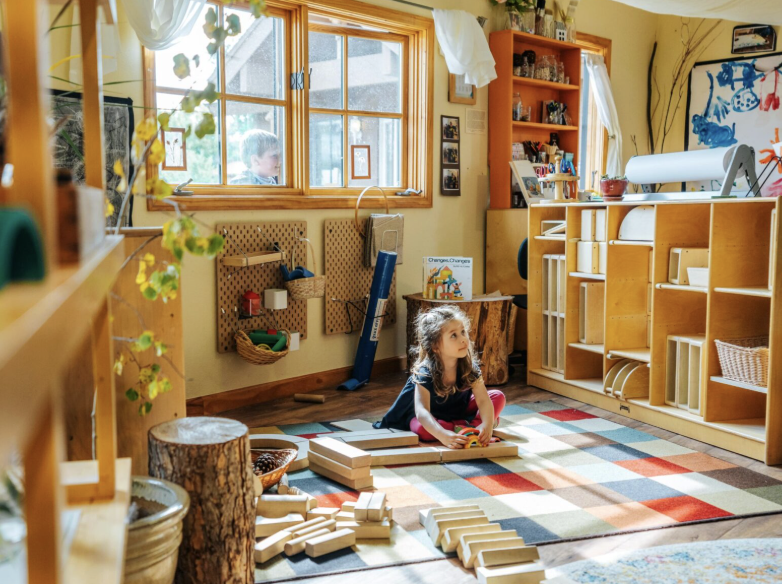
Reggio classrooms are often described as vibrant, flexible learning environments designed to provoke exploration and discovery. Projects emerge from children's questions and observations. Teachers carefully document learning through photographs, notes, recordings, and displays. The environment itself is considered the "third teacher," alongside children and adults. Key characteristics include:
Inquiry-based learning
Emergent curriculum
Collaborative projects
Strong documentation practices
Artistic exploration
Flexible learning experiences
Benefits for Children
Reggio-inspired programs often help children develop:
Critical thinking
Creativity
Collaboration
Communication skills
Problem-solving abilities
Confidence in expressing ideas
Children are encouraged to investigate topics deeply and contribute meaningfully to group learning experiences. Reggio Emilia may appeal to families who value:
Creativity and innovation
Child-led inquiry
Collaboration
Flexible curriculum
Deep project-based learning
Which Approach Is Right for Your Child?
Every child learns differently.
A child who enjoys order, independence, and focused work may thrive in a Montessori environment. A child with a vivid imagination who loves storytelling, movement, and nature may flourish in a Waldorf setting. A child who is naturally curious, collaborative, and eager to ask questions may feel energized in a Reggio-inspired classroom. It's also important to remember that many modern schools blend elements of all three philosophies. You may find programs that combine Montessori independence, Waldorf creativity, and Reggio-inspired project work.
When evaluating a school, consider:
How teachers interact with children
The classroom atmosphere
Opportunities for play and exploration
The school's philosophy regarding academics
How well the environment aligns with your child's temperament
The quality of relationships, teaching, and community often matters just as much as the educational philosophy itself.
Waldorf, Montessori, and Reggio Emilia each offer a thoughtful alternative to traditional early childhood education. While their methods differ, they share a commitment to honoring childhood, fostering curiosity, and supporting the development of confident, capable learners. The goal is not to find the "perfect" philosophy but to find an environment where your child feels engaged, respected, and inspired to learn. When children are supported in ways that match their developmental needs and natural strengths, they are more likely to develop a lifelong love of learning regardless of which philosophy is on the classroom door.
